How Collaboration is Improving Service Delivery in Uganda
Partnership is one of the most powerful drivers of development in Uganda. Since the early 1990s, when decentralisation policies were introduced, the aim has been to bring services closer to the people by empowering local governments. The Local Government Act of 1997 gave communities a formal role in shaping decisions and holding leaders to account. It was meant to shift power and responsibility away from the centre and into the hands of those who understood local problems best.
Three decades later, the promise of decentralisation remains only partly fulfilled. Services remain uneven, resources are stretched thin, and citizens feel excluded from decisions that affect their daily lives.
The evidence is clear. Recent data from Sauti za Wananchi paints a sobering picture: just one in four Ugandans attended a village meeting between 2019 and 2023, and trust in local government has fallen from 42 per cent to 38 per cent over the same period. Perhaps most tellingly, Afrobarometer found in 2024 that citizens feel their voices are ignored mainly: only 15% of Ugandans feel that Members of Parliament often or always listen to ordinary people, while just 25% say the same about district councillors. This disconnect between citizens and their leaders undermines the very spirit of decentralisation. If people feel their voices do not matter, they are less likely to participate. When citizens disengage, leaders lack the feedback and support they need to make sound decisions. And when accountability falters, services suffer.
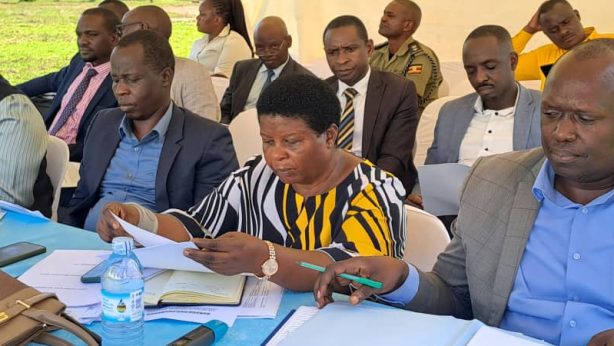
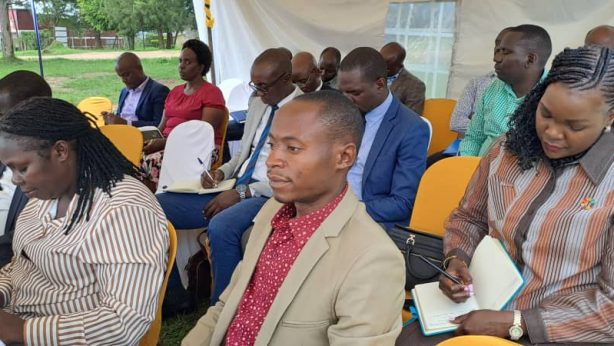
And yet, something new is also happening. In select districts and communities across Uganda, local governments, communities, and development partners are experimenting with a fresh approach to collaboration through the Uraghabishi model. Led by Twaweza since 2019, this initiative is showing how citizens can move from the sidelines to the centre of development, working hand in hand with leaders to solve local problems.
The idea is simple but powerful: communities come together to identify and prioritise their pressing problems, and collectively find solutions to those within their capacity, while also seeking support from their leaders at local government and other stakeholders. Leaders are engaged from the start, not as passive recipients of demands but as active partners in problem solving. Citizens are encouraged to contribute what they can – time, labour, resources – so that development is not seen as something delivered from outside, but as something built together. The process is as important as the outcome, because it fosters trust, accountability and ownership.
The results are already visible. In Adagani village, Kole district, residents sought support from their local government over inadequate, unsafe, and unclean water sources. The sub-county, in turn, engaged the NGO Link to Progress, which installed a solar-powered water system, significantly improving access to clean, safe water for several surrounding villages. In Busongole, community members did more than request boreholes: they contributed their own money and transport to ensure the work was done. That sense of shared ownership has made the facilities more sustainable and strengthened community pride.
Elsewhere, collaboration has gone beyond water. In Bwase-Bugobwe, constant follow-up with leaders helped secure access to electricity. In Namwendwa, leaders backed community efforts to secure new classrooms at Butaaga Primary School, ensuring that hundreds of children could learn in safer, more dignified conditions. In Kisiro, dialogue with district officials led to improvements not just in water supply but also in education facilities. And in Nabwigulu Sub County, local leaders took citizen priorities seriously, successfully lobbying for funds to rehabilitate vital infrastructure identified by the community itself.
What links these stories together is not the individual projects but the way they were achieved. The Uraghabishi model rests on a belief that everyone has a voice and deserves to be heard, that leaders must be involved from the very beginning, that communities themselves should contribute to the changes they seek, and that the same approach can be applied across sectors, from water and electricity to roads, schools and health. They demonstrate that decentralisation can work, but only when citizens and leaders collaborate as equal partners.
For policymakers and government leaders, the lesson is clear: if we want to restore trust, improve accountability and deliver services that meet real needs, we must scale these approaches. Boreholes, classrooms, and solar systems are significant achievements, but the bigger story is how they were achieved and what that process reveals about building stronger systems of governance.
The power of partnership is not measured only in physical infrastructure. Its true value lies in rebuilding trust between citizens and their leaders. When communities are engaged, leaders are responsive, and resources are pooled, development becomes not just possible but inevitable.
The Uraghabishi model also offers an important reminder: progress is not always quick or spectacular. Sometimes it means starting small, agreeing on priorities, and building trust step by step. But these modest beginnings are often what lay the foundation for later, bigger changes. A village meeting today may set the stage for stronger health services in the future.
Uganda’s decentralisation journey is far from over. The reforms of the 1990s created the framework, but frameworks alone do not deliver results. What matters is how they are used: whether citizens are empowered, whether leaders are responsive, and whether partnerships are built. From Adagani to Kisiro, we are seeing glimpses of what that future could look like: a country where no voice goes unheard, no problem is tackled alone, and no community is left behind.
The task ahead is to build on these successes and apply the principles of participation, inclusion, active listening, accountability, collective action, and shared responsibility more widely. If we do so, we can finally make good on the promise of decentralisation: a Uganda where government listens, citizens participate, and development is shaped by those it is meant to serve.
This post was written by David Mugurusi, Senior Program Officer, Voice and Participation, Uganda.