Barazas shine a spotlight on Uganda’s service delivery gaps
Across Uganda, the Baraza programme is steadily reshaping how citizens engage with their leaders. Designed as a flagship social accountability platform under the Office of the Prime Minister (OPM), Barazas create rare public spaces where residents can confront duty bearers on issues ranging from stolen project funds to absent health workers, stalled roads, and understaffed schools.
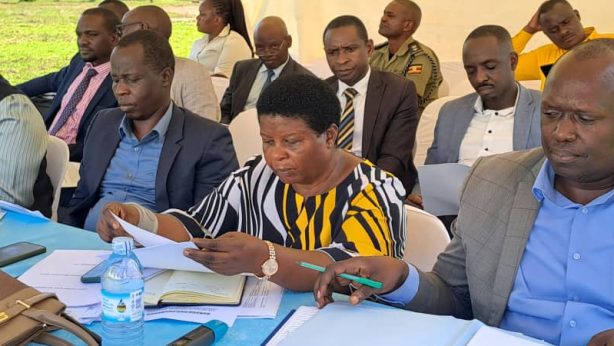
Recent Barazas in Kyenjojo and Kamuli districts, organised by Twaweza Uganda in collaboration with the Office of the Prime Minister (OPM), alongside district authorities and civil society partners, laid bare the stark realities of service delivery in the country.
Nathan Otutu, Assistant Commissioner for Monitoring and Evaluation at OPM, described the forums as “the eye and bloodstream of government performance. They allow citizens to speak their minds about the services they receive and put service providers on the spot to account for public resources.”
On the ground, communities did not hold back. In Kyenjojo District, Chief Administrative Officer Asuman Masereka said newly created sub-counties and town councils are struggling to deliver basic services. “These administrative units were created without staff or resources. Residents expect roads, but no funds exist,” he said.
Kyenjojo District LC5 Chairperson Gilbert Rubaihayo accused the central government of recentralizing projects intended for local management, citing misused funds in seed school initiatives. “This is not decentralisation, it is recentralization,” he argued.
Roads remain a flashpoint. District Engineer Stephen Kusemererwa said Kyenjojo receives just one billion shillings a year for maintaining 2,160 kilometres of road, with some sub-counties receiving as little as 2.7 million shillings. “We appeal for increased funding. People depend on these roads for economic activity and market access,” he said.
While in Kyenjojo, the struggle centred on infrastructure, the Kamuli Baraza exposed parallel crises in the health sector. Residents cited absenteeism, extortion and poor treatment.
Dr Moses Lyagoba, Kamuli District Health Officer, acknowledged the shortage, noting that only 606 of 1,550 approved health staff are in post. “Absenteeism stems from distance, but also from attitude. We are addressing both,” he said.
Security officials also urged vigilance. Kamuli District Internal Security Officer (DISO), James Kaahwa, warned residents against shielding corrupt officers. “Government is you and me. If someone has embezzled money, call it out,” he said.
Civil society observers praised Barazas for highlighting systemic issues. Violet Alinda, Country Lead for Twaweza Uganda, said the concerns raised, unemployment, health service gaps, corruption, and deteriorating roads, reflect national trends. “Many people are paying for services because of a lack of information. Information gaps fuel corruption,” she noted.
Since their introduction in 2009, OPM has revealed that Barazas have been held more than 2,000 times, offering an unfiltered view of government performance and a rare chance for citizens to hold leaders accountable in real time.
For districts like Kyenjojo and Kamuli, the picture is unvarnished: Uganda’s service delivery system is under strain, but communities are increasingly ready to speak up and demand better.